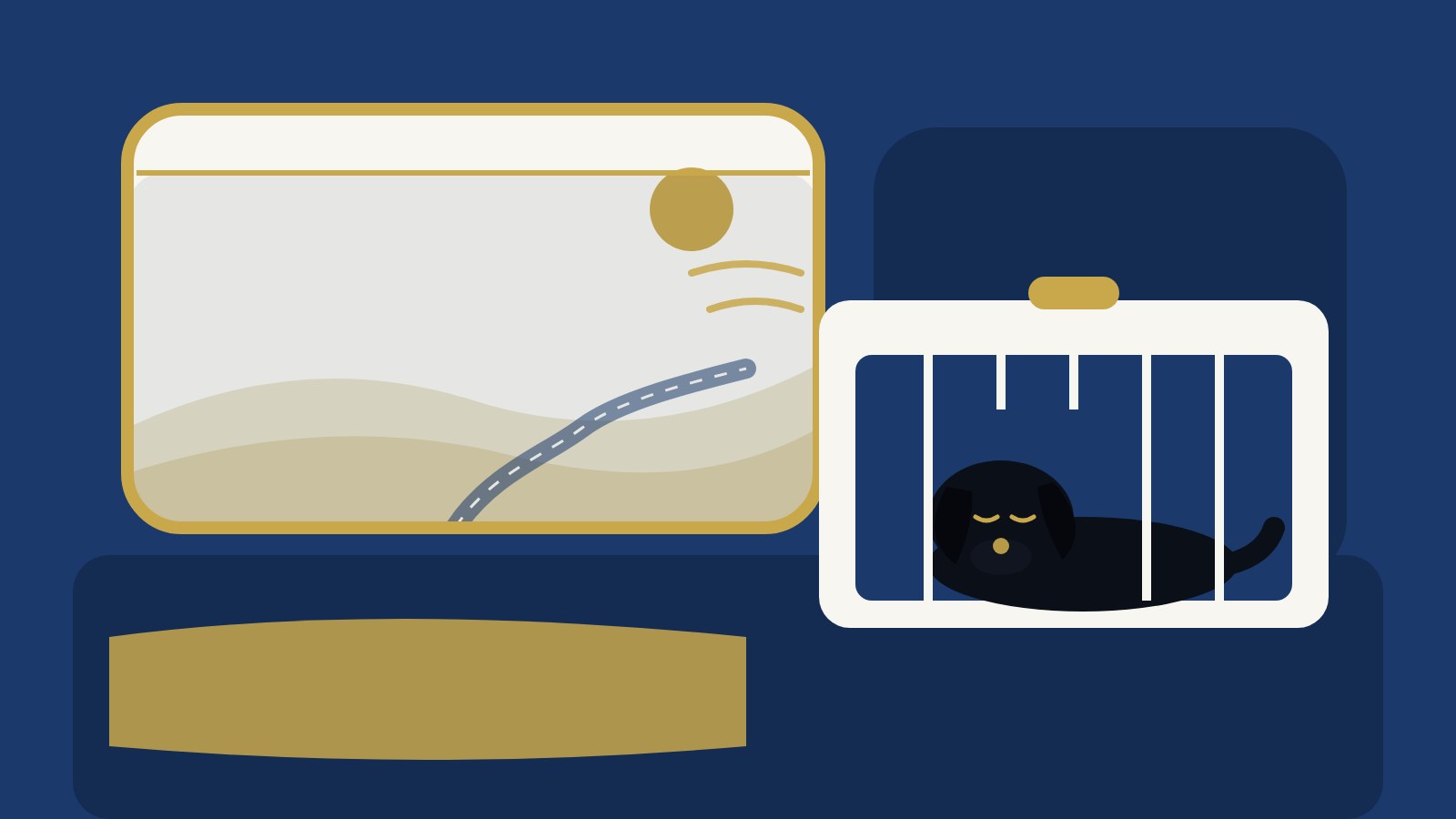
Puppies get carsick mostly because the balance system in their inner ear is still developing, so the motion of a moving car scrambles signals that an adult dog handles easily. The fix is a mix of practical steps (a light stomach, fresh air, a secure forward-facing spot, regular breaks) and short, pleasant practice drives that teach your puppy the car is a good place. Most puppies improve with time, and a holiday trip is far easier when you start that practice now.
You know the sound. Twenty minutes out of the driveway, somewhere between the second stoplight and the highway ramp, a small wet gulp comes from the back seat. Then the drool. Then the thing you were hoping would not happen on the good blanket. If you are packing for Thanksgiving or the December holidays with a young puppy, that sound may be the only part of the trip you are dreading.
Here is the reassurance you need first: this is common, and it is usually temporary. The American Kennel Club notes that motion sickness is most often seen in puppies, and Chewy's veterinary content says most dogs grow out of it. Your puppy is not dramatic and you are not doing it wrong. You are dealing with a body that has not caught up with the highway yet, and sometimes with a mind that has already decided the car is where bad things happen.
Why Do Puppies Get Carsick?
Puppies get carsick for two overlapping reasons, one physical and one emotional, and the response is a little different for each.
An inner ear still under construction. Motion sickness comes from the vestibular system, the part of the ear that manages balance. In young dogs it is not fully developed, which is why puppies are more prone to car sickness than adults. Watching scenery fly past a side window adds to the mismatch.
A car with a bad reputation. Think about where a young puppy has been in a car. Away from their mother and littermates. To the vet for shots. The AKC points out that dogs can link the car with past sickness or those stressful trips, and that anxiety alone can produce drooling, whining and vomiting.
Heat and a full stomach. A warm car makes panting and drooling worse, and food sitting in a sloshing stomach gives nausea something to work with. Both are easy to change.
Is It Car Sickness or Car Anxiety?
Timing is the most useful clue. PetMD's travel guidance explains that symptoms which begin the moment your puppy is put in the car usually point to anxiety, while symptoms that start partway through the drive usually point to motion sickness. Plenty of puppies have a bit of both.
Vomiting is the obvious sign. The quieter ones are worth learning, because they show up first and give you a chance to pull over before the mess:
- Panting when the car is not hot and the puppy has not been active
- Repeated lip-licking and swallowing
- Drool hanging in strings or soaking the bedding
- Whining or crying
- Going unusually still and flat, which owners often mistake for calm
Honestly, that last one fools people constantly. A puppy who has gone quiet and glassy in the back seat is often a puppy about to be sick.
What Should You Do Before a Holiday Road Trip?
Start with the vet, then the car, then the stomach. PetMD advises talking to your veterinarian about your destination well ahead of time, because some vaccines take a few weeks to provide protection, and interstate travel can require a health certificate. That conversation is also the right moment to ask whether your puppy needs anti-nausea help for the drive.
Practice drives matter more than any product. A puppy who has taken a dozen short, uneventful trips to somewhere fun arrives at the big holiday drive with a completely different expectation of the car.
The AKC's trainers describe a gradual approach that works for most puppies. Only move to the next step once your puppy is completely relaxed at the current one:
- Sit in the parked car together for a few minutes with treats, praise and a toy that only appears in the car.
- Add the sounds of travel one at a time: doors closing, locks beeping, you in the driver's seat. Then start the engine and turn it off without going anywhere.
- Drive to the end of the driveway and back. That is a whole session.
- Stretch the drives a little at a time, and make the destination a place your puppy enjoys, like a quiet park a few blocks away.
- If your puppy stops taking treats or gets sick, go back a step. Setbacks are normal. Yelling makes them worse.
Some puppies get this in a single session. Others need days or weeks, according to the AKC. Chewy suggests short sessions of two to three minutes of high-value treats, once a day, until your puppy looks eager to hop in. If you have already done some crate training, you have a head start, because a familiar crate is a familiar room on wheels.
When Should You Feed a Puppy Before a Car Ride?
Feed lighter and earlier than usual, but do not take away water. Sources differ on the exact window: PetMD suggests avoiding food for two or three hours before travel, Chewy says four hours, and the AKC goes as far as 12 hours for dogs that get sick. For a very young puppy, ask your vet how long a gap is right, because small puppies do not handle long stretches without food the way adult dogs do. In practice, many owners simply move breakfast earlier and pack the next meal for after arrival.
How Do You Set Up the Car for a Puppy Who Gets Sick?
Aim for secure, cool, forward-facing and easy to clean. Here is what makes the biggest difference, and what to skip.
Skip These
- Letting the puppy roam loose or ride on a lap
- Clipping a seat belt to the collar
- A closed sedan trunk, ever
- A warm, stuffy car with the heat blasting
- Leaving the puppy alone in the parked car, even briefly
Use These
- A crate, barrier, or harness with a dog seat belt
- A spot in the middle of the back seat, facing forward
- Windows lowered a few inches for fresh air
- A water-resistant seat cover and spare towels
- A blanket or old T-shirt that smells like home
The AKC recommends seating dogs in the middle of the back seat so they look forward rather than out the side windows, and some owners use a solid-sided crate to limit the view. PetMD warns never to attach a seat belt to a collar and never to put a puppy in a closed-in trunk. It also notes that cars overheat quickly in the sun and that puppies are at risk of freezing in winter, which is why a puppy should never wait alone in a parked car while you run into a store.
One more thing that helps: the AKC suggests exercising your puppy about 20 minutes before you leave. A puppy who has had a good walk and a sniff is more likely to sleep, and a sleeping puppy is rarely a sick one.
How Often Should You Stop With a Puppy on a Long Drive?
Plan a stop every two to three hours for a potty break, water and a stretch, as PetMD recommends. Young puppies may need it sooner. A common guide is that a puppy can hold their bladder for roughly their age in months plus one, in hours.
| Puppy's age | Rough bladder limit | Plan a stop about every |
|---|---|---|
| 2 months | About 3 hours | 2 hours |
| 3 months | About 4 hours | 2 to 3 hours |
| 4 months and older | About 5 hours or more | 2 to 3 hours |
Keep your puppy on a leash at every stop, even if they are usually glued to your side. Highway rest areas are loud, unfamiliar and full of other dogs, and a nervous puppy can bolt. If your puppy has not finished the vaccine series, ask your vet whether to avoid busy pet relief areas. Our potty training guide has more on reading those I-need-to-go signals before they become an accident on the seat.
What Should You Pack for a Puppy's First Holiday Trip?
Pack as if the puppy will be sick once, need a walk at a strange place, and want something familiar at bedtime. PetMD's list, plus a few extras for nausea-prone travelers:
- Crate or barrier, harness, dog seat belt
- Two leashes, because one will get chewed or left at a gas station
- Collapsible bowls, food, water and treats
- Poop bags, wipes, paper towels and a plastic bag for soiled bedding
- A favorite toy and a blanket from home
- A pet first aid kit
- A name tag with your current phone number, and an up-to-date microchip
Once you arrive, the house itself is a new adventure, with crowded counters and dropped food. Our post on planning Thanksgiving around a young puppy picks up where the drive ends.
When Should You Call the Vet About Car Sickness?
Call your veterinarian before the trip if practice drives are not helping, and never give a puppy any medication, including over-the-counter motion sickness pills, without your vet's guidance. Chewy notes that some combination human products contain ingredients that can be dangerous to dogs, and PetMD stresses the same caution. Your vet can prescribe anti-nausea medication that is appropriate for your puppy's age and weight.
Also call if your puppy is vomiting outside of car rides, will not drink, seems lethargic after the trip, or if travel anxiety is growing worse rather than better. A certified veterinary behaviorist or a CPDT-KA trainer can help with a puppy whose fear of the car is intense.
The Timeline You Should Expect
Most puppies who are physically carsick improve as they mature, though the AKC is honest that some dogs never fully outgrow it. The emotional side moves faster with practice: days for some puppies, a few weeks for others. If you have a holiday trip on the calendar, a week or two of short daily drives is time well spent, and even a handful of good rides changes how the long one feels.
This is a good season to keep notes. Which day did your puppy first ride without drooling? Which treat worked? Write it in My Puppy's First Year or wherever you keep these things, because by spring you will have forgotten how far you both came.
Your puppy will get there. The first drive to Grandma's might be a towel-and-wipes kind of trip, and that is fine. The quiet practice you do in the driveway now is how you end up with a dog who hops in the back seat, sighs, and sleeps all the way home.
Common Questions
Do puppies grow out of car sickness?
Most do. Young dogs are more prone to motion sickness because their inner-ear balance system is still developing, and many improve as they mature. Some dogs keep a stress response to the car, so pairing growth with short, pleasant practice drives gives the best odds.
How long before a car ride should I stop feeding my puppy?
Advice ranges from two or three hours (PetMD) to four hours (Chewy) and up to 12 hours for sick-prone dogs (AKC). For a young puppy, ask your vet what gap is safe, and never withhold water.
Can I give my puppy Dramamine or Benadryl for the car?
Only with your veterinarian's direct guidance. Some over-the-counter combination products contain ingredients that are dangerous to dogs, and dosing depends on the individual puppy. Your vet can also prescribe a dog-specific anti-nausea medication.
Where should a puppy ride in the car?
Secured in a crate or barrier, or in a harness with a dog seat belt, ideally in the middle of the back seat facing forward. Never clip a seat belt to a collar, and never put a puppy in a closed trunk.
How often should I stop on a road trip with a puppy?
Plan to stop every two to three hours for water, a stretch and a potty break. Very young puppies may need stops sooner, since a common guide is that they can hold their bladder about their age in months plus one, in hours.
The first year goes fast, and the details blur sooner than anyone expects. My Puppy's First Year by Kimberly R. Simmons is the keepsake journal and guide for this season: room for the milestones, the firsts, the photos, and the methods that worked for your puppy.
Explore the Book →