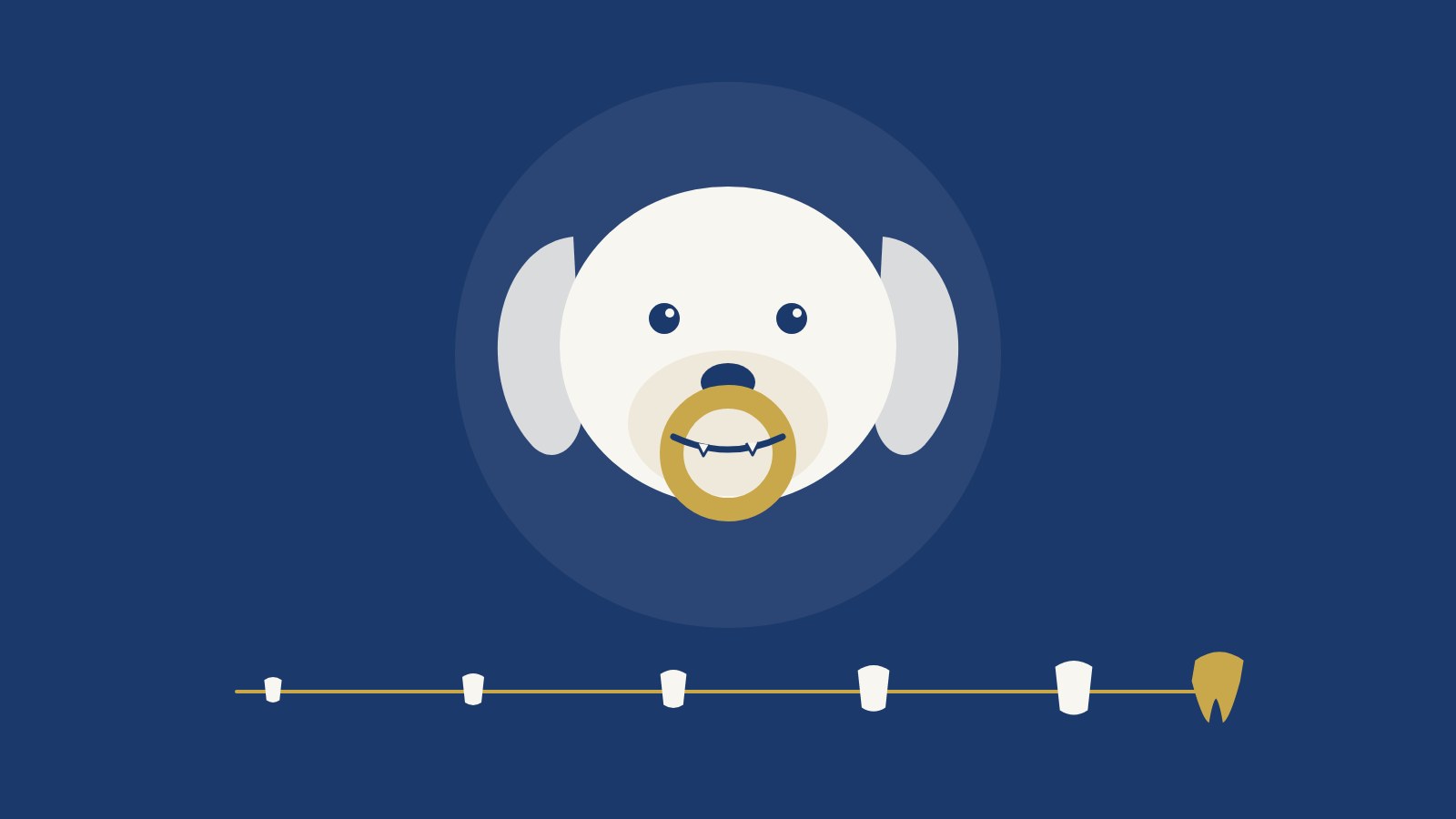
Most puppies stop teething by about 6 months of age, when their adult teeth are in, though the last molars can take until 7 or 8 months. Baby teeth usually start falling out around 3 to 4 months, and the sorest stretch tends to land between 12 and 16 weeks. The heavy chewing that comes with it eases once the adult teeth settle, then often returns for a while in adolescence.
If you are reading this with a damp chair leg in view and a tiny tooth in your sock, that is the short answer. This is a phase with a shape, and you can see the end of it from here.
Here is the reframe that makes the next few months easier. Your puppy is not being destructive on purpose. Their gums ache, a new set of teeth is pushing through, and chewing is the only tool they have to make it feel better. Your job is not to stop the chewing. Your job is to decide what gets chewed.
When Do Puppies Get Their Baby Teeth?
Puppies are born without teeth, and their baby teeth start coming in at roughly 2 to 4 weeks old, while they are still with their mother. The American Kennel Club notes that by about 5 to 6 weeks, all of the baby teeth should be in. PetMD puts the full set at around 6 to 8 weeks, which is about when most puppies go home.
There are 28 of those baby teeth, and anyone who has played tug with an eight-week-old knows exactly how sharp they are. They come in front to back: incisors first, then the canines, then the premolars. Puppies have no baby molars at all. Those arrive only with the adult set.
When Do Puppies Lose Their Baby Teeth?
Most puppies begin losing baby teeth at about 3 to 4 months old, and the AKC describes weeks 12 to 16 as the main shedding window. The incisors usually go first. Canines and premolars follow over the next couple of months as 42 adult teeth push in behind them.
You may never see most of it happen. Owners tend to find, according to the American Kennel Club, little crumb- to rice-sized teeth around the house, and many more get swallowed with dinner. PetMD notes that swallowed baby teeth are generally harmless and common, so there is no need to search the floor with a flashlight.
A little blood is part of this too. Pumpkin lists small spots of blood on chew toys, mild drooling and some bad breath among the normal signs of teething. A lot of blood is a different matter, and worth a call to your vet.
What Does the Puppy Teething Timeline Look Like?
The puppy teething timeline runs from the first baby teeth at a few weeks old to a full adult set somewhere between 6 and 8 months. Sources differ by a few weeks at each stage, and so do puppies. Large and giant breeds, according to PetMD, tend to get adult teeth a little earlier than small breeds. Treat this table as a guide, not a schedule.
| Age | What is happening | What you will notice |
|---|---|---|
| 2 to 4 weeks | Baby teeth begin to erupt, incisors first | Still with the breeder or litter |
| 5 to 8 weeks | All 28 baby teeth are in | Needle-sharp teeth in play |
| 12 to 16 weeks | Baby teeth shed; adult incisors and canines start coming in | Tiny teeth on the floor, more chewing, some sore gums |
| 4 to 6 months | Adult premolars erupt | Mouthing at its peak; molars beginning |
| 5 to 7 months | Adult molars erupt | Chewing tapers off for many puppies near the end |
| 6 to 8 months | Full set of 42 adult teeth | Any baby tooth still in place needs a vet check |
PetMD places the period of heaviest mouthing between 3 and 7 months. If your puppy is somewhere in that range and chewing everything in reach, they are right on time.
Note the week you find the first lost tooth and the week the chewing finally calms down. It takes ten seconds, and it is the kind of detail you will be glad to have when you look back on this year.
How Can You Soothe a Teething Puppy?
The best relief for a teething puppy is cold and texture, offered in something they are allowed to destroy. The major sources agree on that much, and it matches what works in an ordinary living room at eleven at night.
- Chilled or frozen rubber toys. Rubber teething toys can go straight into the freezer, an idea the AKC recommends. Cold numbs sore gums for a little while.
- A stuffed toy, frozen. PetMD suggests freezing part of your puppy's regular kibble inside a stuffable rubber toy. It turns a meal into twenty quiet minutes.
- Cold vegetables. PetMD lists chilled or frozen carrots, green beans and blueberries as options. Keep pieces sized for your puppy.
- Variety. Whole Dog Journal recommends offering a mix of textures and densities, from rubber to fabric. Puppies get bored of one toy quickly, and boredom sends them back to the table legs.
One honest opinion: rotating toys is underused and remarkably effective. Put half of them away, then swap them out every few days. A toy that disappeared on Tuesday is thrilling again by Saturday.
What Should a Teething Puppy Not Chew?
A teething puppy should not chew anything as hard as their own teeth, anything they can break into pieces, or anything you would mind losing. Pumpkin puts the rule simply: anything as hard as a tooth can crack a tooth. The AKC adds that sticks can be hazardous and that toys should be checked regularly for wear.
Skip These
- Bones and very hard chews
- Sticks from the yard
- Toys with loose stuffing or pieces coming off
- Shoes, cords and anything with string
- Human toothpaste on a puppy's teeth
Use These
- Rubber teething toys, chilled
- Frozen stuffed toys with their own food
- A rotating mix of textures
- Supervised chewing and a gate or crate when you can't watch
- A soft finger brush and dog toothpaste
That last item matters more than it seems. Human toothpaste, the AKC warns, can contain ingredients toxic to dogs, such as xylitol. Teething season is a good time to start touching your puppy's mouth gently every day, so tooth brushing feels ordinary later.
The holidays add a few temptations of their own. Ornaments, light strings and gift ribbon are all at puppy height in December. If a tree is going up in your house this year, our guide on keeping a curious puppy away from the tree covers the setup in detail.
Is Teething the Reason My Puppy Bites?
Teething is one reason puppies bite, but it is rarely the only one. Puppies also nip because they are overtired, overexcited, or simply learning how hard is too hard. Sore gums make all of that worse, which is why biting can seem to get worse right in the middle of teething.
Teething makes the teaching harder, but the teaching still has to happen. Redirect to a toy, keeping toys within easy reach, and end play if the nipping continues; that is the AKC's advice, and we walk through the full method, step by step, in How to Stop a Puppy From Biting. If biting ever looks aggressive rather than playful, talk with your vet or a trainer.
When Should You Call the Vet About Puppy Teeth?
Call your vet if any baby teeth are still in place once the adult teeth have come in, usually by 6 to 8 months. These are called retained baby teeth, and Pumpkin notes they are common in small breeds. According to the AKC, they may need to be removed. Do not try to pull a stubborn tooth yourself.
Other reasons to check in:
- More than a few small spots of blood, or bleeding that does not stop
- An adult tooth that is loose, chipped or broken
- A puppy who stops eating or chewing because their mouth seems to hurt
- Adult canines that look crowded or crooked, which Pumpkin says your vet should monitor
- Persistent bad breath after the adult teeth are in
Your puppy's routine visits are a natural time to ask. Ask the vet to look in your puppy's mouth during the 12- to 16-week stretch to confirm things are progressing normally, as the AKC suggests.
Why Is My Older Puppy Chewing Again?
Many puppies go through a second chewing phase after teething ends. Whole Dog Journal notes that adolescent dogs often show increased chewing until around 18 months of age, and some dogs longer. This round is not teething. Think energy, curiosity and a growing jaw looking for work.
The good news is that everything you set up now carries straight over: the toy rotation, the gates, the habit of trading a forbidden object for an allowed one. For a broader look at what comes next, our month-by-month guide to the first year lays out the stages ahead, and if your puppy is still young, crate training gives them a safe place to chew when you can't supervise.
Teething feels endless while you are in it. Thankfully, it ends. In a few months you will notice that the shoes have been safe for a week, and you will realize you missed the exact day it ended. That quiet is what all this redirecting is building toward.
Common Questions
At what age do puppies stop teething?
Most puppies finish teething by about 6 months, when their adult incisors, canines and premolars are in. The back molars can take until 7 or 8 months. Chewing often eases after that, though many dogs chew more again during adolescence.
How many teeth do puppies have?
Puppies have 28 baby teeth, which are usually all in by 6 to 8 weeks of age. Adult dogs have 42 teeth. The extra teeth are mostly molars, which puppies do not have at all.
Is it normal for a puppy's gums to bleed while teething?
A little blood on a chew toy is normal while baby teeth are falling out. Heavy bleeding, or bleeding that does not stop, is not. If you see more than small spots, call your vet.
Do puppies swallow their baby teeth?
Yes, often. Many baby teeth are swallowed while eating or chewing, and PetMD notes this is generally harmless. You may find a few tiny teeth around the house, but most owners never see the majority of them.
What if my puppy's baby teeth don't fall out?
Baby teeth that stay in after the adult teeth arrive are called retained baby teeth, and they are common in small breeds. Tell your vet if any remain by about 6 to 8 months, since they may need to be removed. Do not try to pull them yourself.
The first year goes fast, and the details blur sooner than anyone expects. My Puppy's First Year by Kimberly R. Simmons is the keepsake journal and guide for this season: room for the milestones, the firsts, the photos, and the methods that worked for your puppy.
Explore the Book →